
40 Backend Concepts Every Engineer Should Know Before Next System Design Interview
A visual, connected walkthrough of the full path from zero to architect.

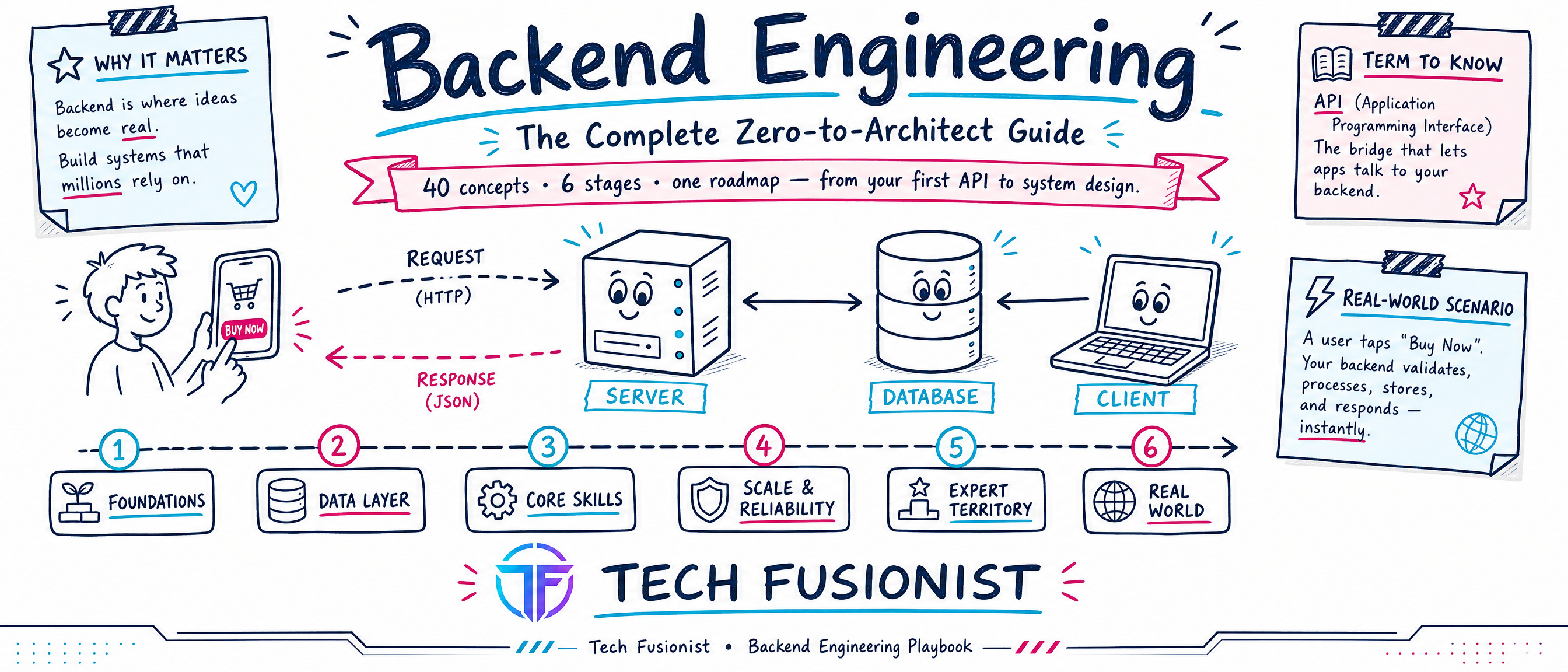
Every app you use follows the same simple journey.
You tap a button. A request travels across the internet. A server processes it. A database returns data. A response comes back to your screen.
Backend engineering is everything that happens in between.
Instead of learning 40 disconnected topics, think of backend as a journey with six stages. Master each stage, and you’ll gradually move from building simple APIs to designing scalable systems.
Stage 1: Learn How the Web Works
Everything starts with an HTTP request.
Understand how clients communicate with servers, what HTTP methods and status codes mean, how DNS, TCP, and TLS work, and how an API processes a request from start to finish.
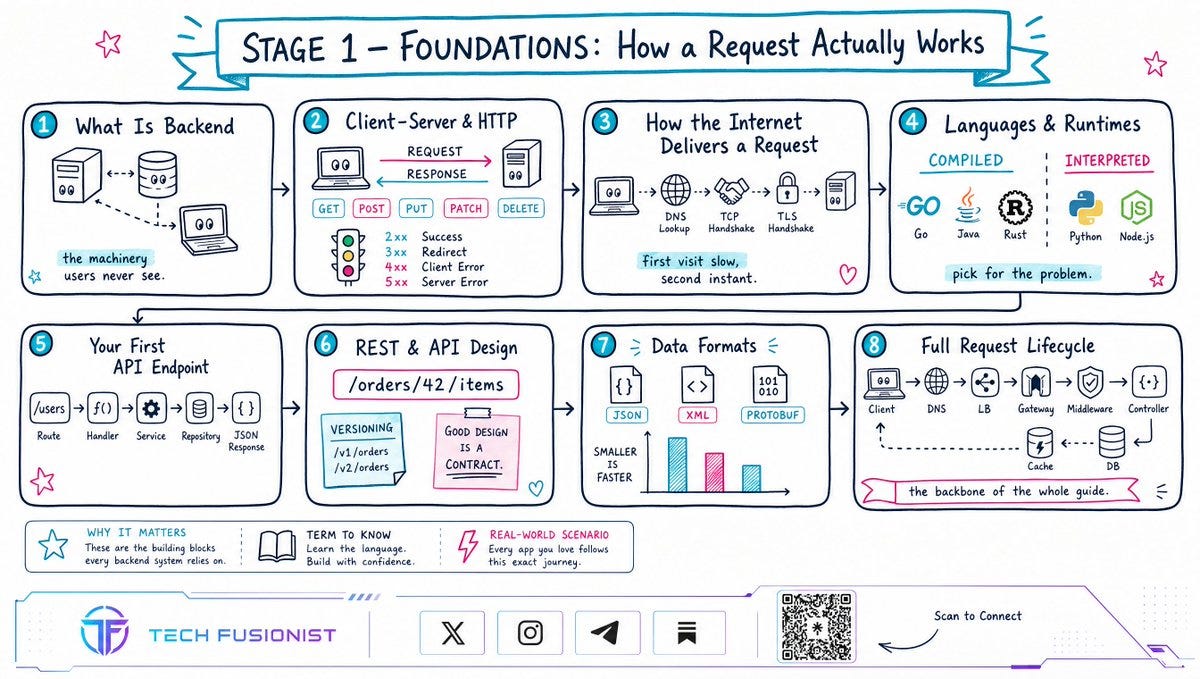
Once you understand one request lifecycle, every backend application becomes much easier to understand.
Stage 2: Master Data
Your application is only as good as its data.
Learn SQL, database relationships, normalization, indexes, transactions, and when to use NoSQL databases like Redis or MongoDB.
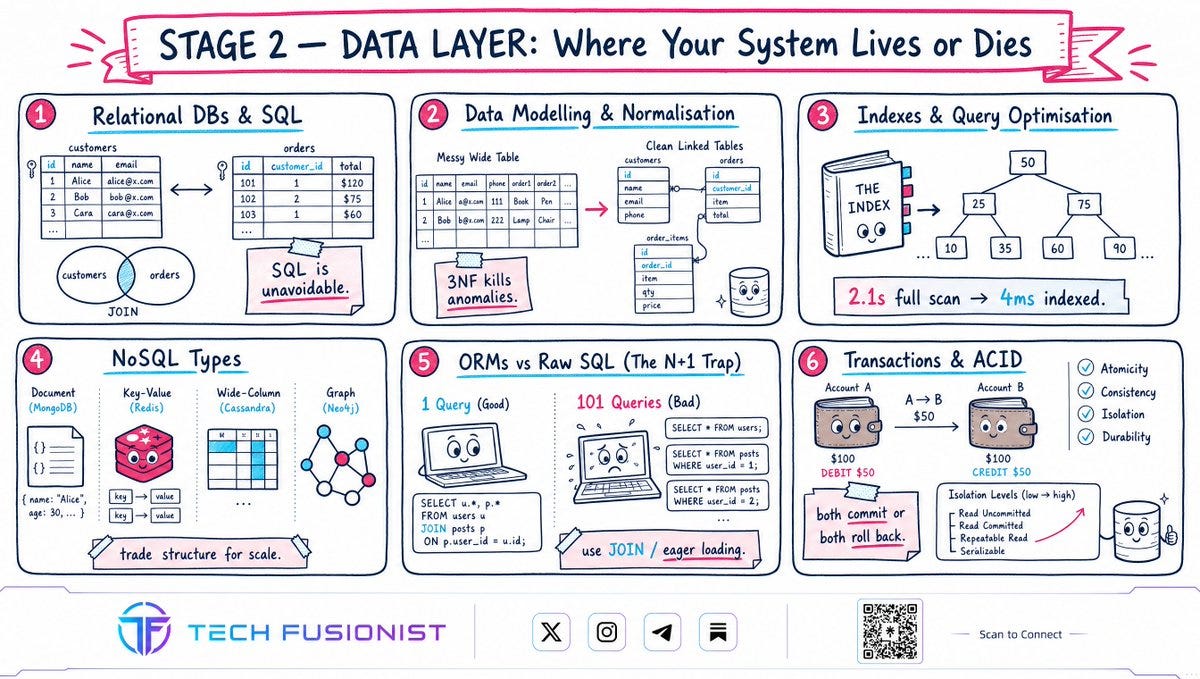
Good database design saves months of future headaches.
Stage 3: Build Production-Ready Applications
Now it’s time to build applications people can actually use.
Learn authentication, authorization, validation, layered architecture, caching, background jobs, file storage, and real-time communication.
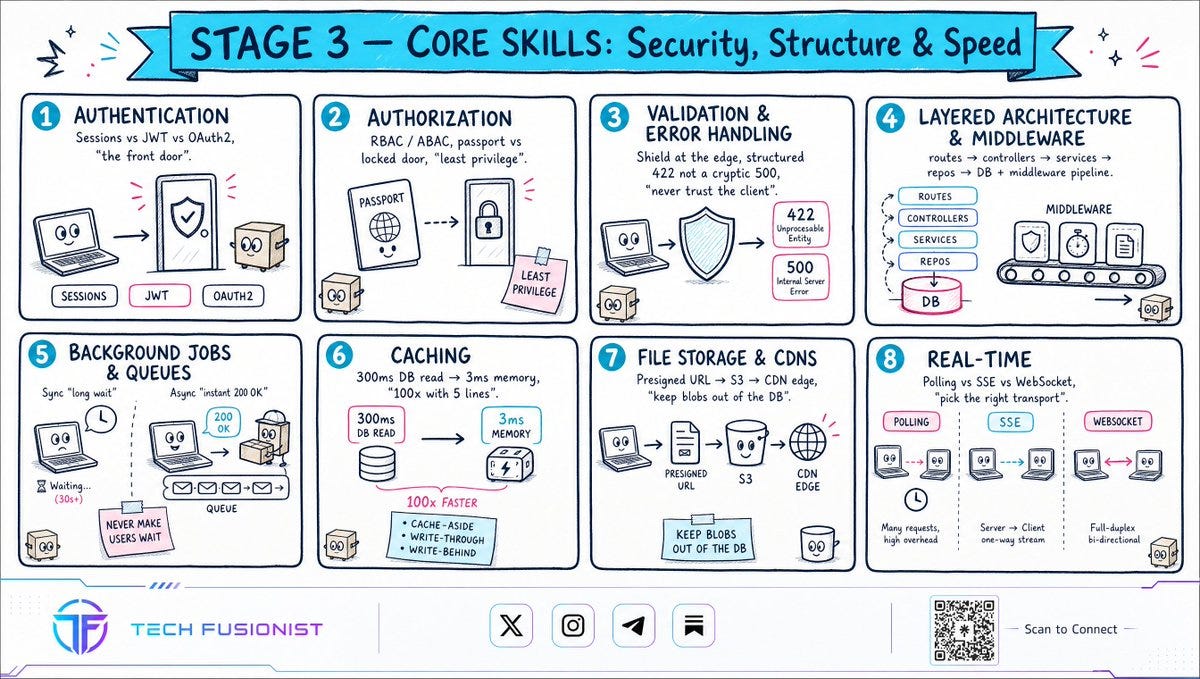
This is where projects start feeling like real products.
Stage 4: Scale Your System
A project that works for 100 users may fail with 100,000.
Learn load balancing, horizontal scaling, caching strategies, message queues, API gateways, monitoring, logging, and resilience patterns.
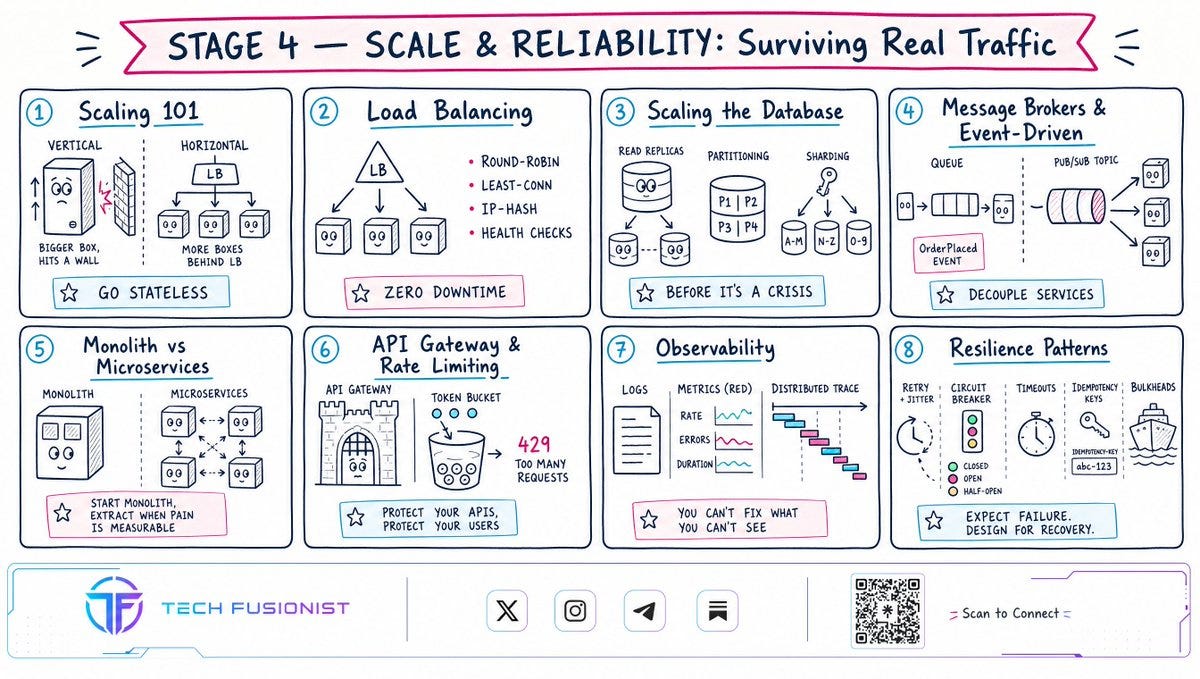
Your goal isn’t just to build software - it’s to keep it running.
Stage 5: Think Like a Distributed Systems Engineer
As systems grow, every decision becomes a trade-off.
Understand CAP theorem, eventual consistency, distributed transactions, Saga pattern, optimistic locking, security best practices, performance optimization, and multi-tenancy.
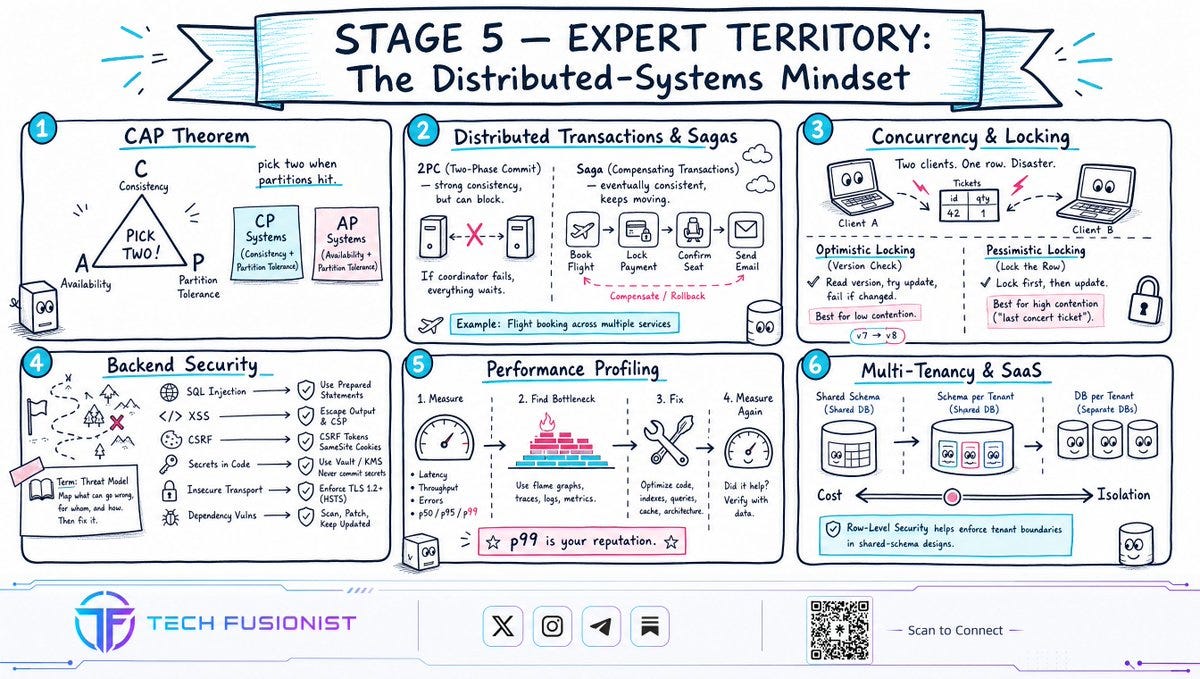
These are the concepts behind modern cloud applications.
Stage 6: Become an Architect
Finally, learn how everything connects.
Understand CI/CD pipelines, deployment strategies, system design interviews, scalability patterns, and real-world production incidents.
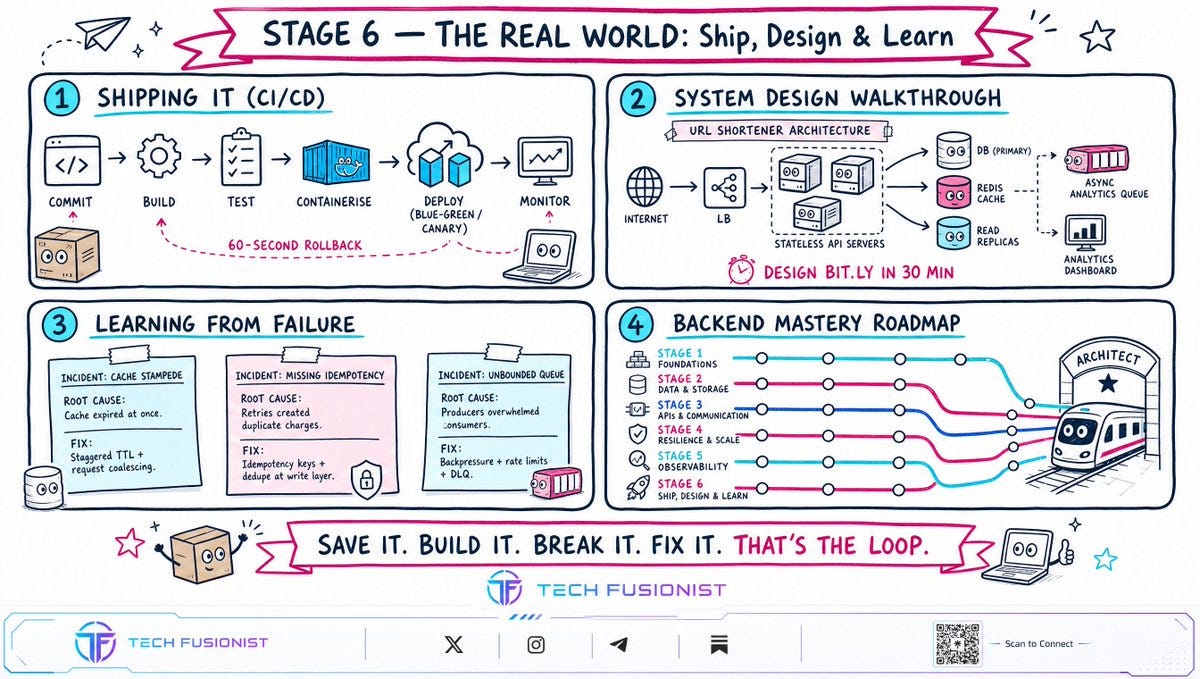
Architecture isn’t about drawing boxes.
It’s about making systems reliable, scalable, and easy to maintain.
The Big Picture
Backend engineering isn’t a collection of random technologies.
Each concept builds on the previous one:
HTTP leads to APIs.
APIs interact with databases.
Databases power applications.
Applications need security.
Security and performance enable scale.
Scale leads to distributed systems.
Distributed systems lead to architecture.
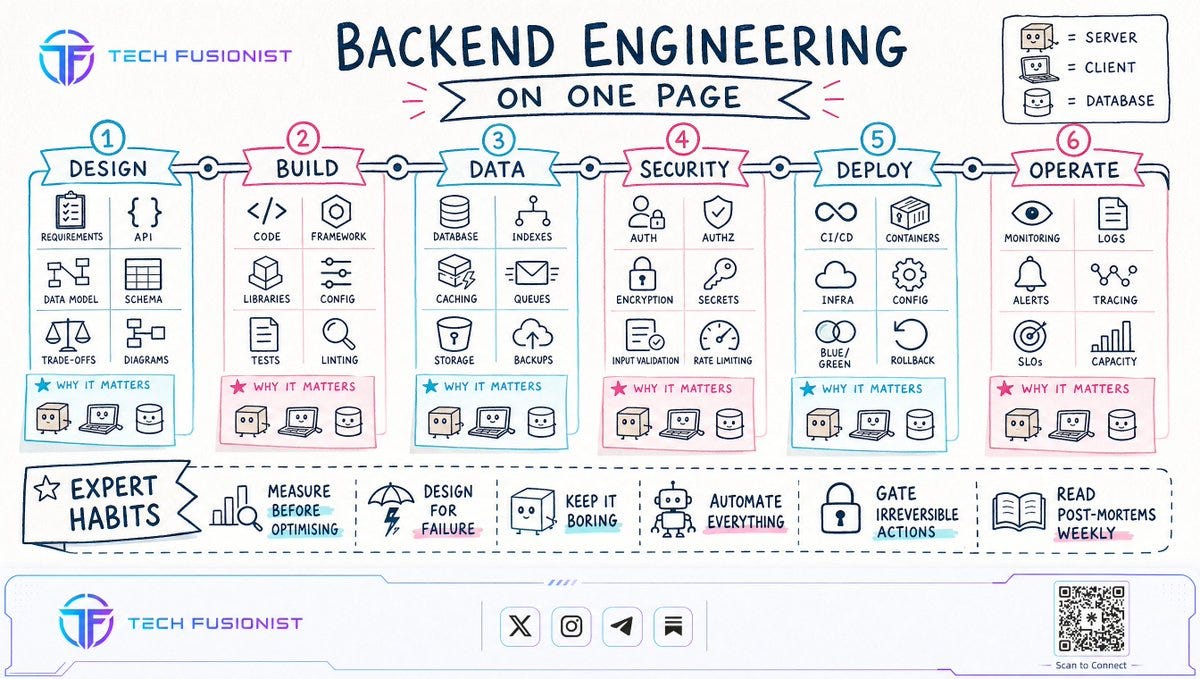
Learn them in order, build projects along the way, and you’ll naturally grow from beginner to architect.
The goal isn’t to memorize every concept.
The goal is to understand how they all fit together.
That’s what makes a great backend engineer.
Found it helpful then, Like & share with your friend to through visualised content!
Follow, Tech Fusionist on other platforms for more quick simplified visual content related to DevOps, Cloud, Linux, Kubernetes, and AI content.
🔗 Linktree: https://linktr.ee/techfusionist
— Tech Fusionist
This roadmap does a good job of connecting the dots. Pairing each stage with a real-world project is probably the fastest way to turn these concepts into practical engineering skills.