
20 production-ready AI systems visual Playbook (with 12 practical layers)
Anyone Can Call an LLM. Almost Nobody Can Ship One.

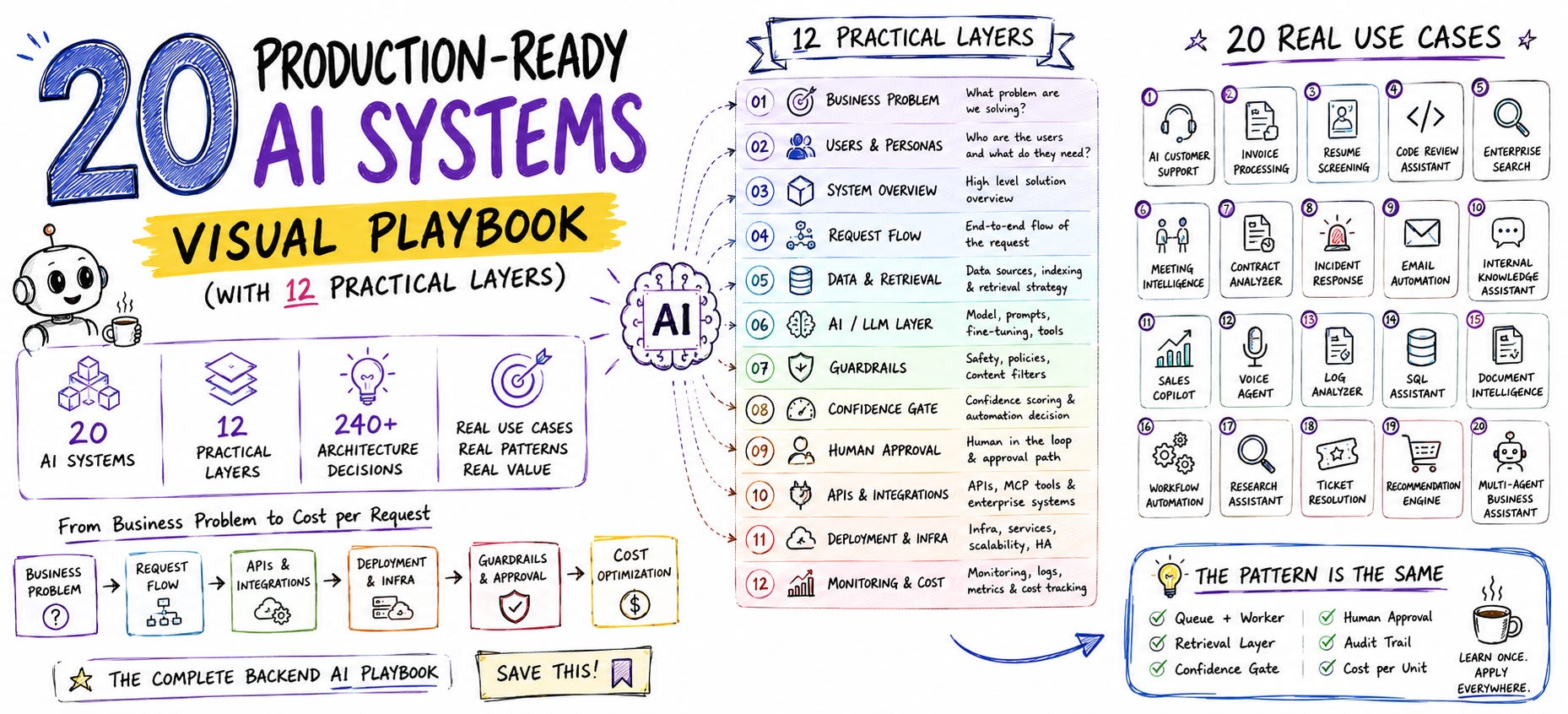
Most developers can integrate an LLM with just a few lines of code.
But building an AI system that works reliably in production is a completely different challenge.
Real AI products need much more than a model.
They need retrieval, guardrails, confidence scoring, human approval, monitoring, security, and cost optimization.
That’s exactly why I analyzed 20 real AI system case studies used across different industries.
Instead of focusing on prompts, I focused on the architecture behind them.
Let’s dive in.
1. AI Customer Support Platform
Customer support teams spend hours answering the same repetitive questions.
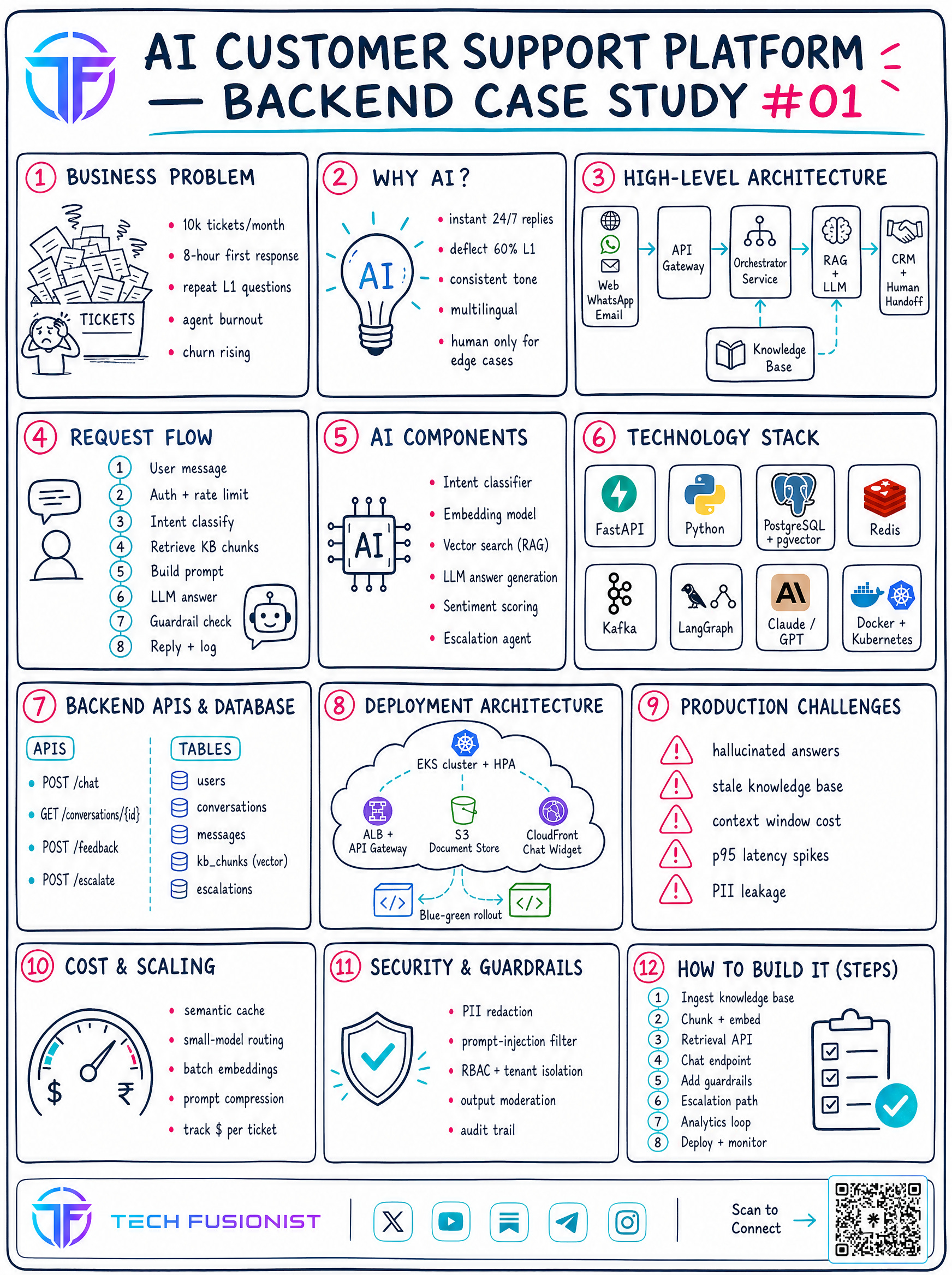
A Retrieval-Augmented Generation (RAG) system can search your knowledge base and generate accurate, source-backed answers instantly.
The real challenge is knowing when the AI should stop answering and hand the conversation to a human.
Key takeaway:
Build strong escalation rules.
Measure ticket deflection rate.
Track cost per support ticket.
2. AI Invoice Processing System
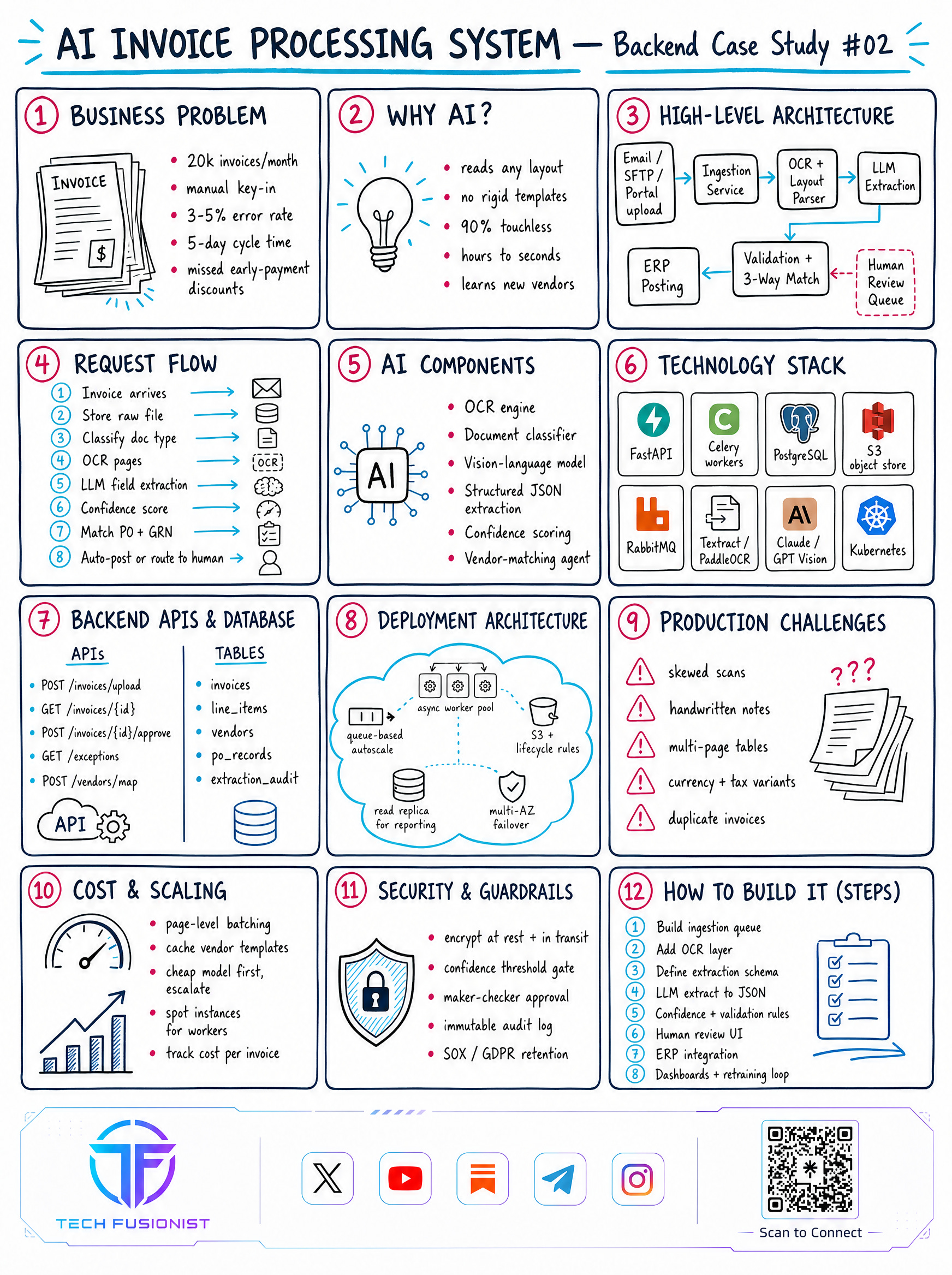
Finance teams process thousands of invoices every month.
Instead of creating custom templates for every vendor, combine OCR with a Vision Language Model to extract structured information automatically.
The important engineering decision isn’t extraction.
It’s confidence scoring.
Invoices with low confidence should always go to human reviewers.
Key takeaway:
OCR + Vision AI
Confidence thresholds
Human approval workflow
3. AI Resume Screening Platform
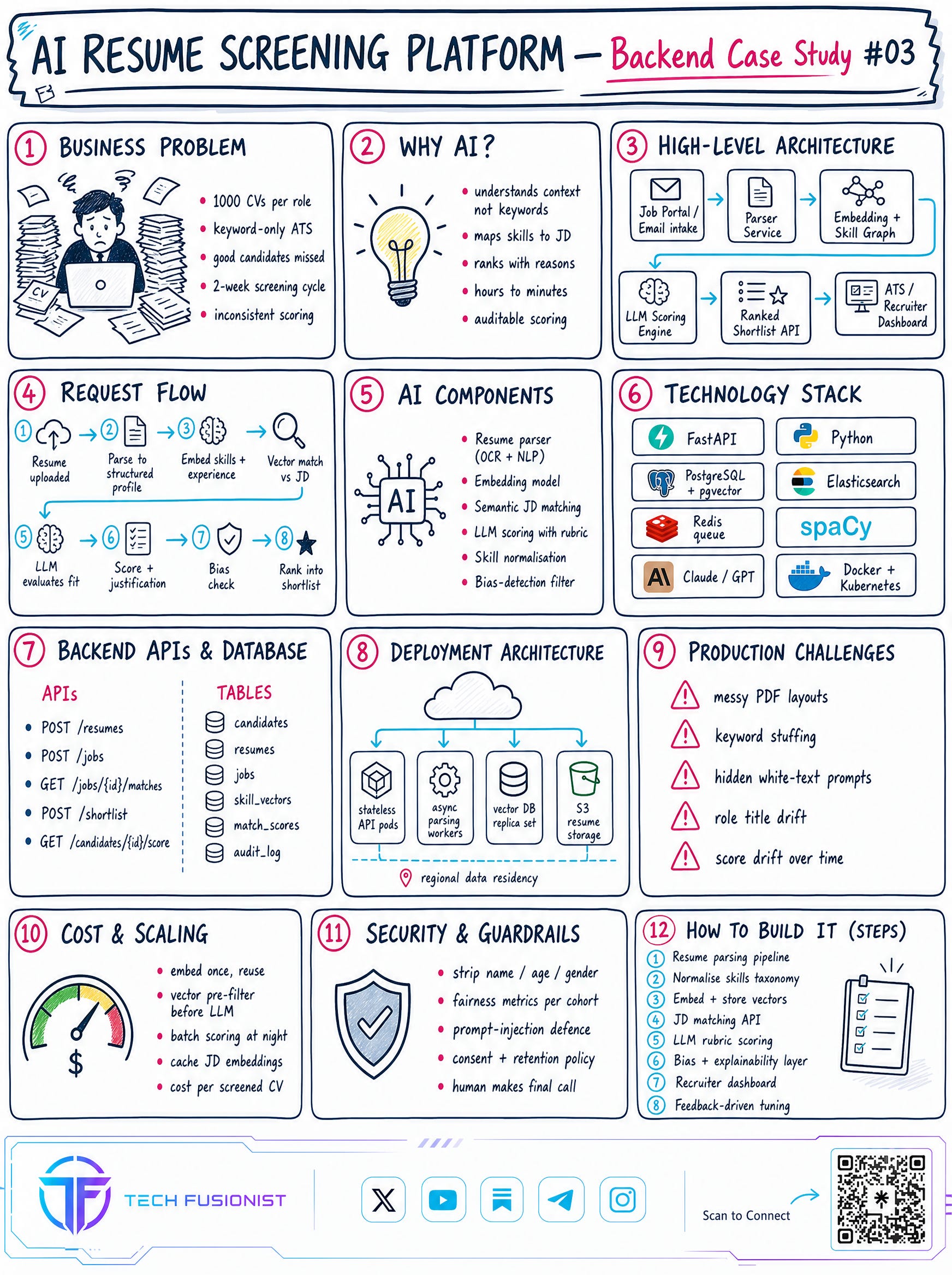
Traditional ATS systems only match keywords.
Modern AI systems compare resumes and job descriptions using embeddings and semantic search.
Candidates are scored against predefined hiring criteria instead of keyword matching.
Always remove personal information before evaluation to reduce bias.
Key takeaway:
Vector search
Fairness checks
Human hiring decisions
4. AI Code Review Assistant
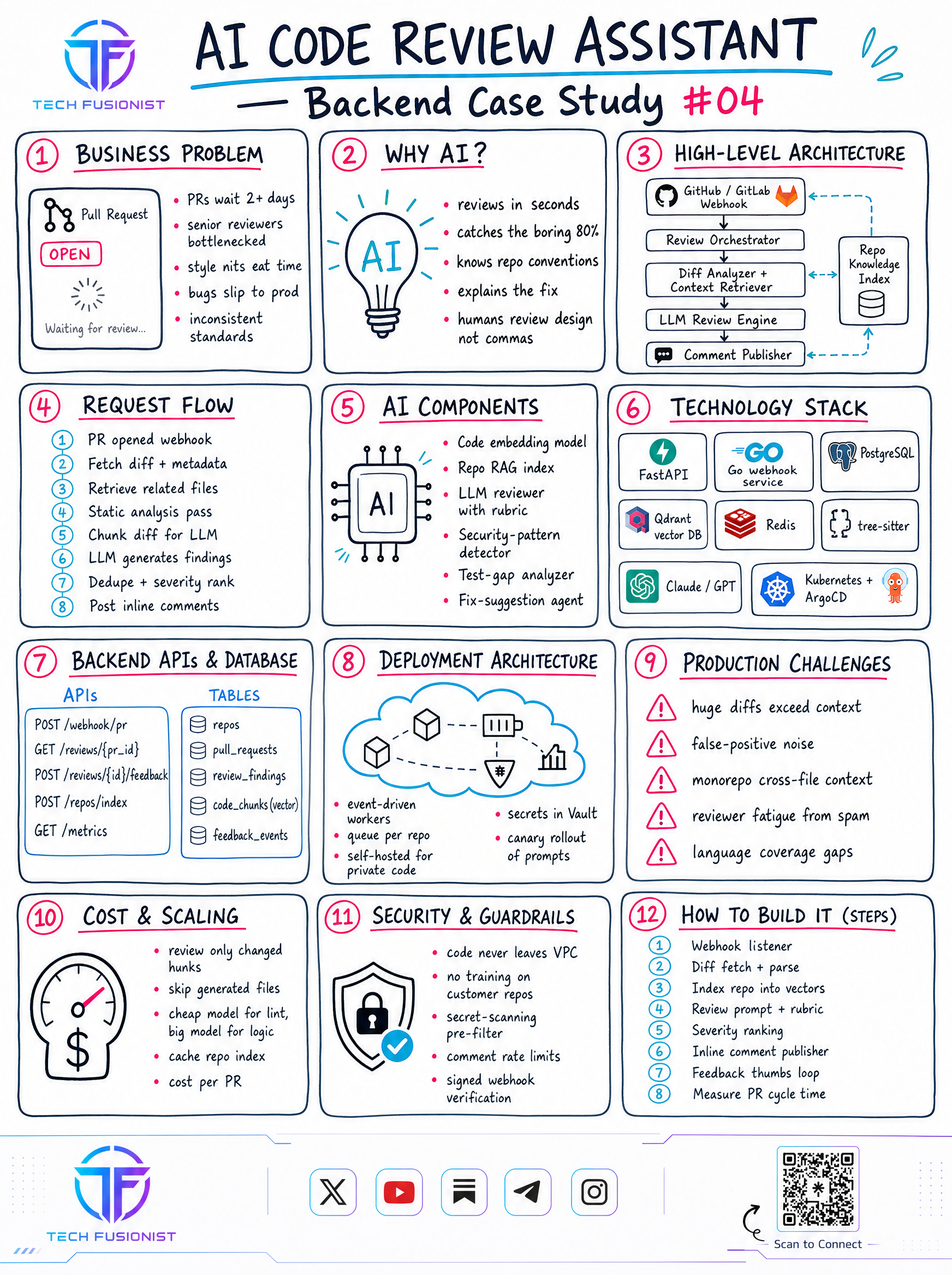
Senior engineers spend too much time reviewing repetitive pull requests.
An AI reviewer can analyze code changes, retrieve related files, and generate useful review comments before humans even open the PR.
Review only changed files instead of the entire repository to reduce cost.
Key takeaway:
Git webhooks
Repository retrieval
Faster review cycles
5. AI Enterprise Search
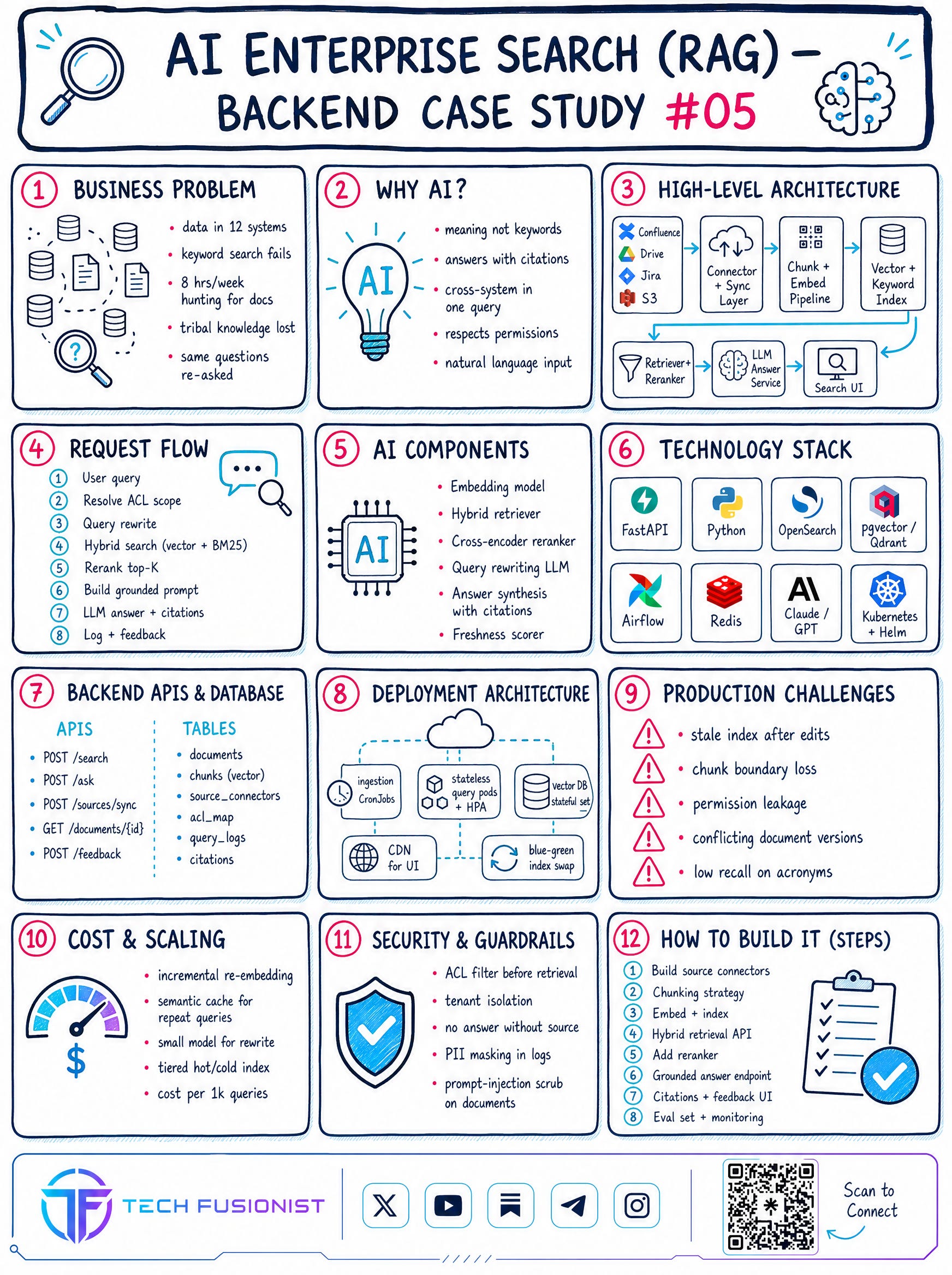
Company knowledge lives everywhere.
Confluence.
Google Drive.
Jira.
S3.
Internal Wikis.
A hybrid search system combines keyword search with vector search to retrieve the best documents before generating answers.
Never ignore permissions.
Access control must happen before retrieval.
Key takeaway:
Hybrid retrieval
Role-based access
Source citations
6. AI Meeting Intelligence
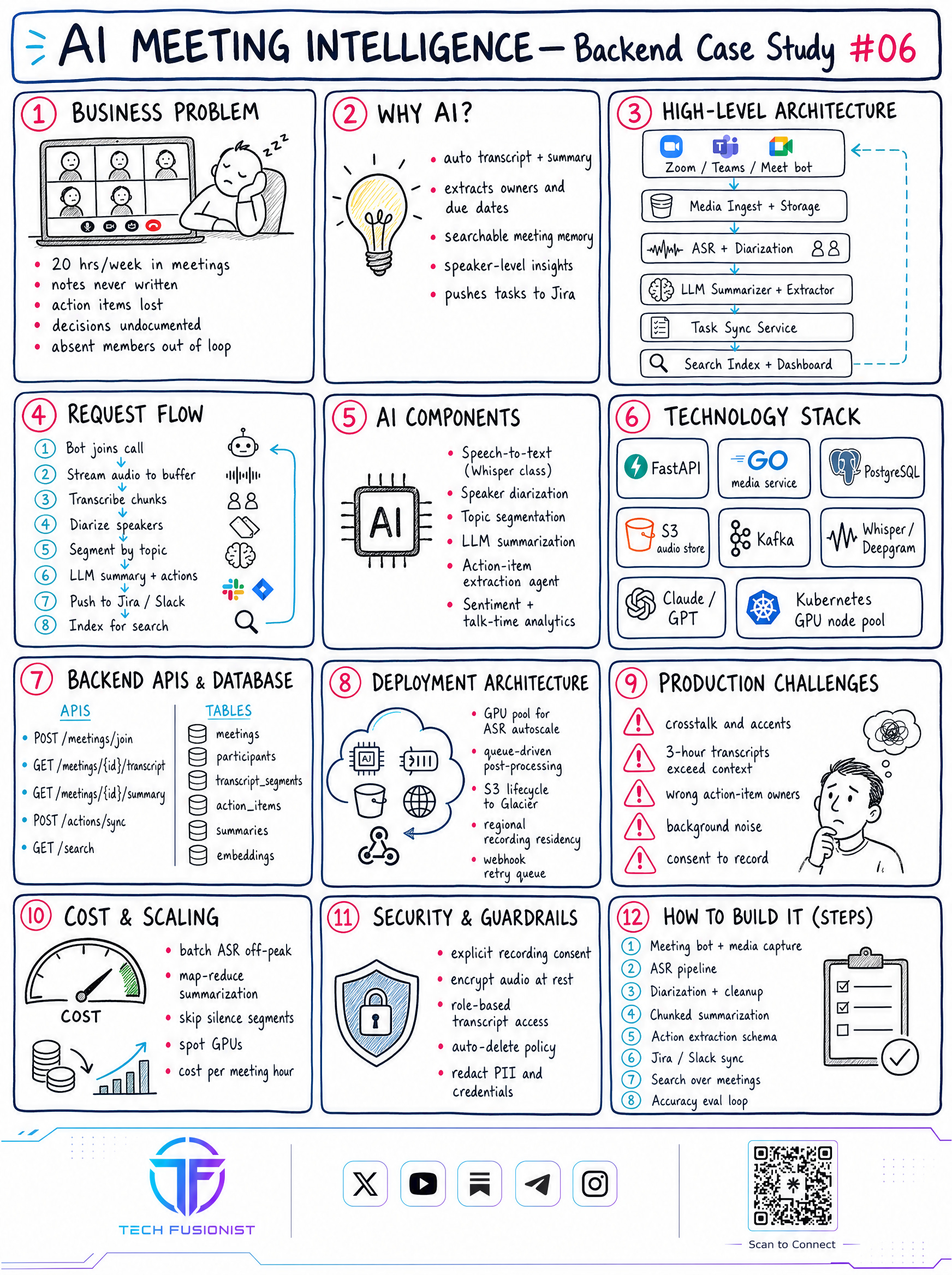
Meetings generate hours of discussions but very little documentation.
AI can automatically transcribe meetings, summarize discussions, identify action items, assign owners, and capture deadlines.
Long meetings require hierarchical summarization because they exceed model context limits.
Key takeaway:
Speech-to-text
Speaker identification
Action item extraction
7. AI Contract Analyzer
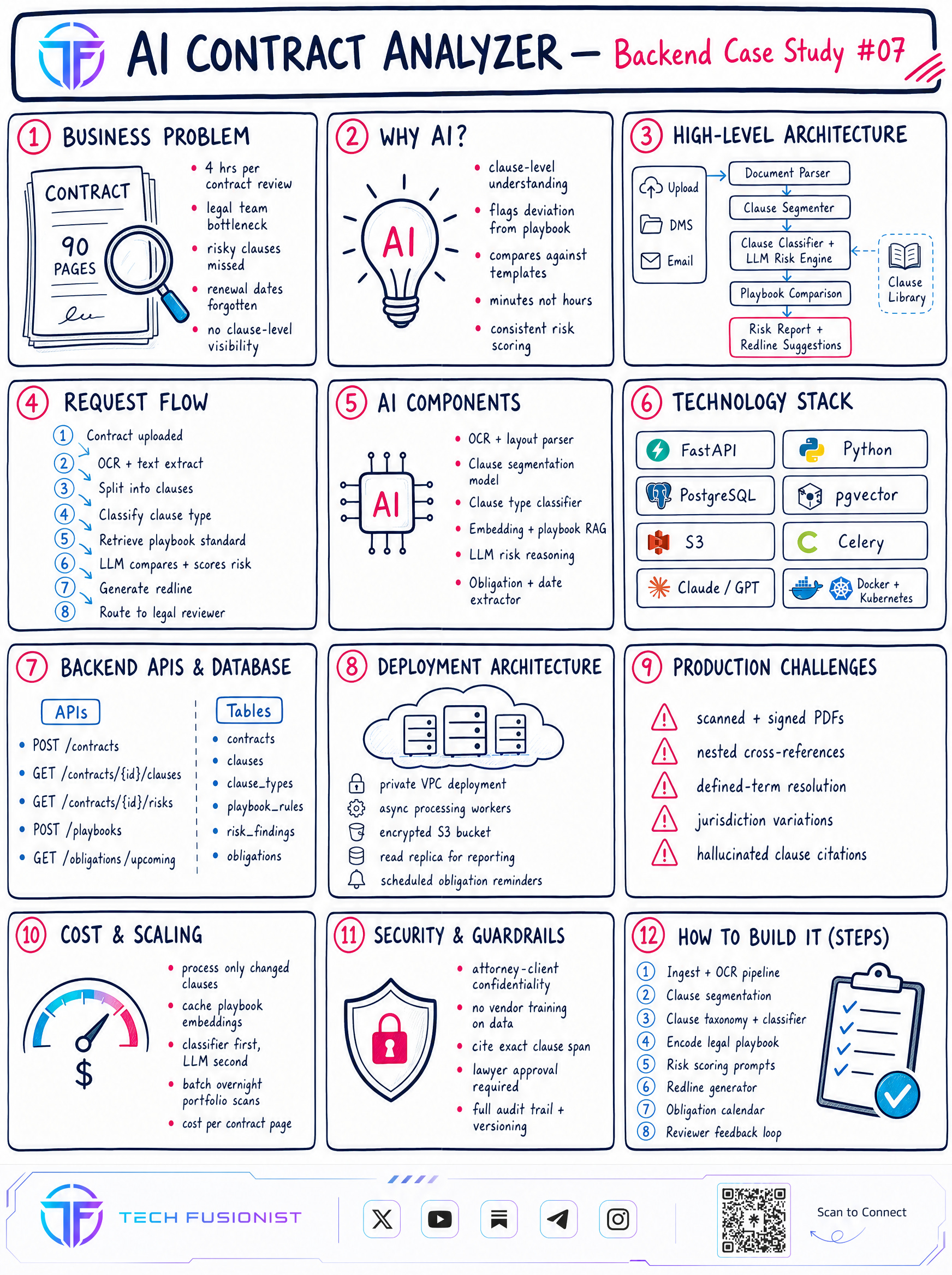
Legal teams review hundreds of pages of contracts manually.
AI can break contracts into clauses, compare them with internal policies, and highlight risky sections.
Every recommendation should point to the exact clause.
Never generate unsupported legal advice.
Key takeaway:
Clause classification
RAG over legal documents
Human legal approval
8. AI Incident Response Assistant
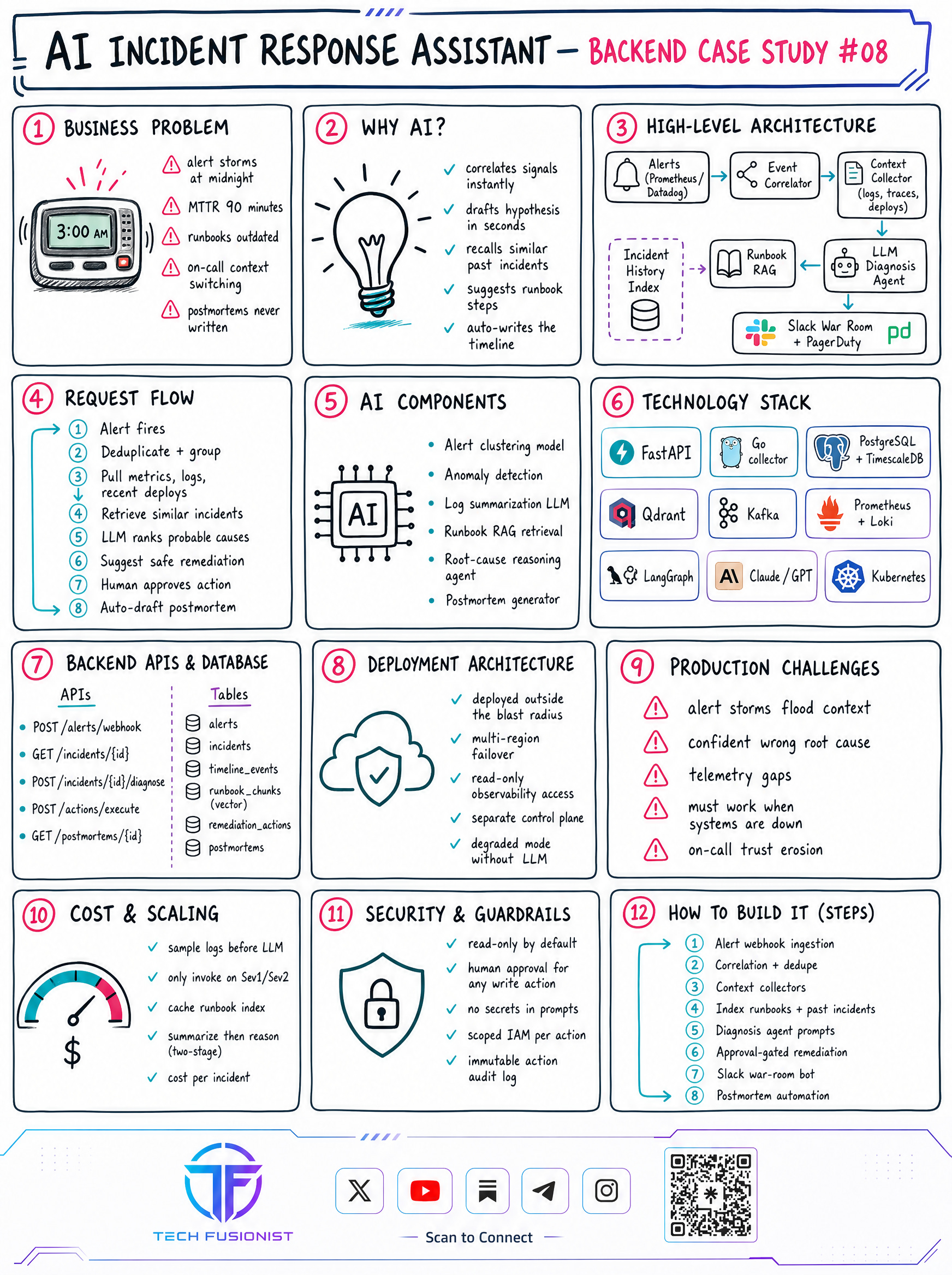
When production fails at 3 AM, engineers need context immediately.
AI can correlate alerts, logs, deployments, and historical incidents to suggest likely root causes.
Keep the assistant read-only by default.
Every production action should require approval.
Key takeaway:
Log correlation
Incident retrieval
Human-controlled automation
9. AI Email Automation
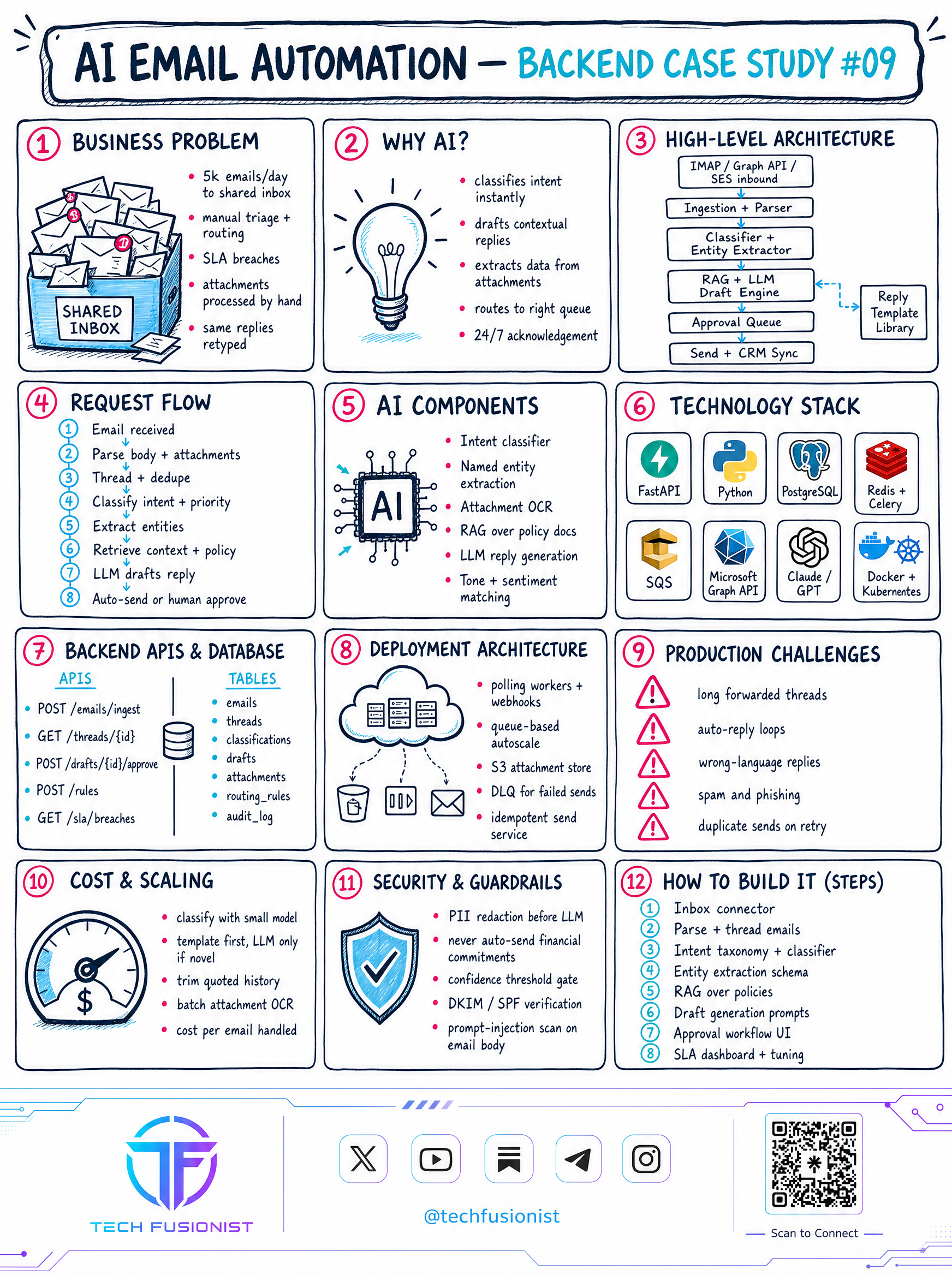
Shared inboxes receive thousands of emails every day.
AI can classify requests, extract information from attachments, and draft responses automatically.
Always prevent duplicate emails and retry issues.
Never allow automatic financial commitments.
Key takeaway:
Email classification
Entity extraction
Approval before sending
10. AI Internal Knowledge Assistant
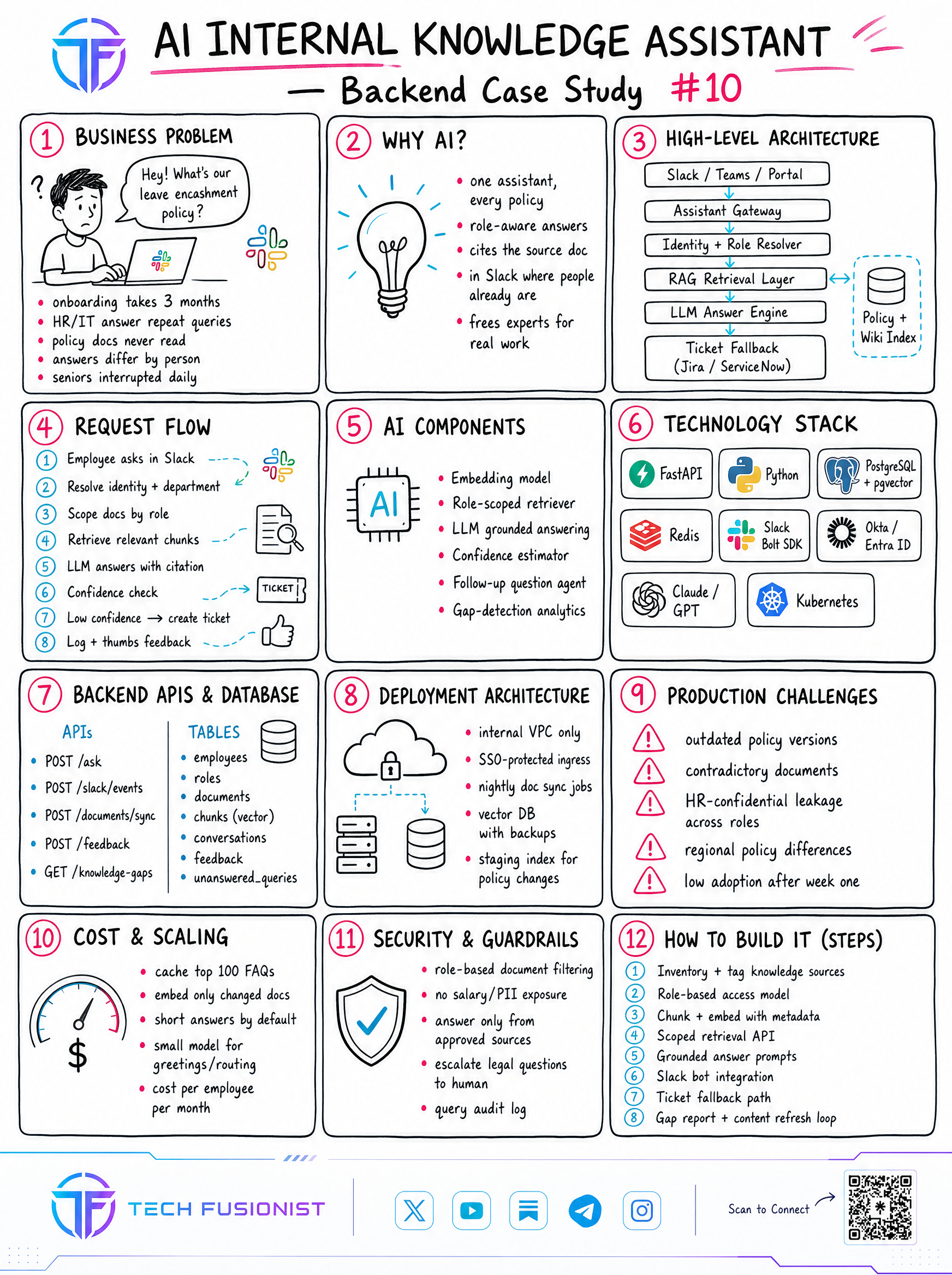
Every organization answers the same employee questions repeatedly.
An internal RAG assistant inside Slack or Microsoft Teams can provide accurate answers using company documentation.
Restrict retrieval based on employee roles.
Key takeaway:
Internal knowledge search
Access control
Documentation gap analysis
11. AI Sales Copilot
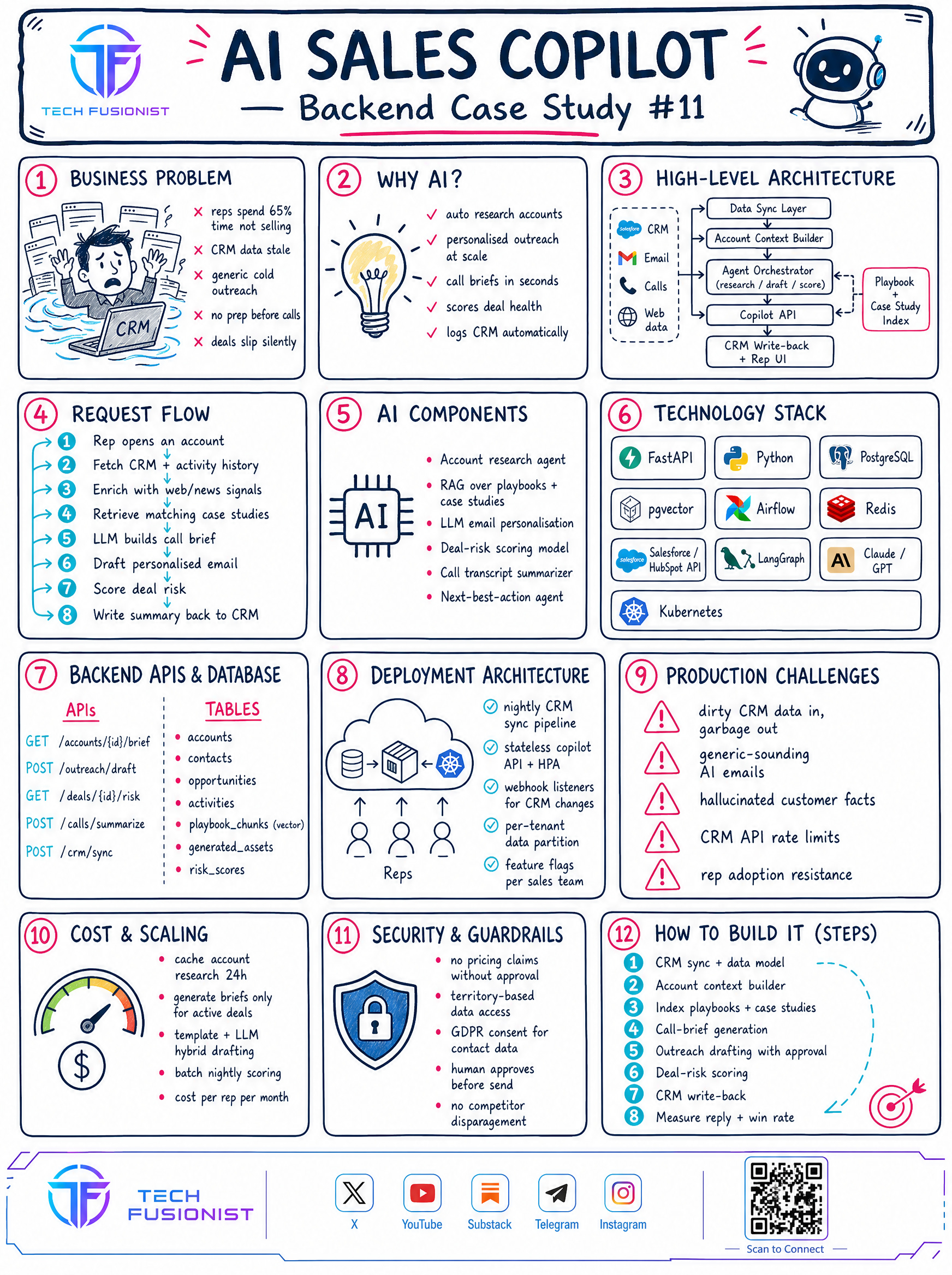
Sales representatives spend more time updating CRM systems than talking to customers.
AI can prepare call summaries, retrieve similar customer success stories, and generate personalized outreach drafts.
Good recommendations depend on clean CRM data.
Key takeaway:
CRM integration
Personalized insights
Better sales productivity
12. AI Voice Agent
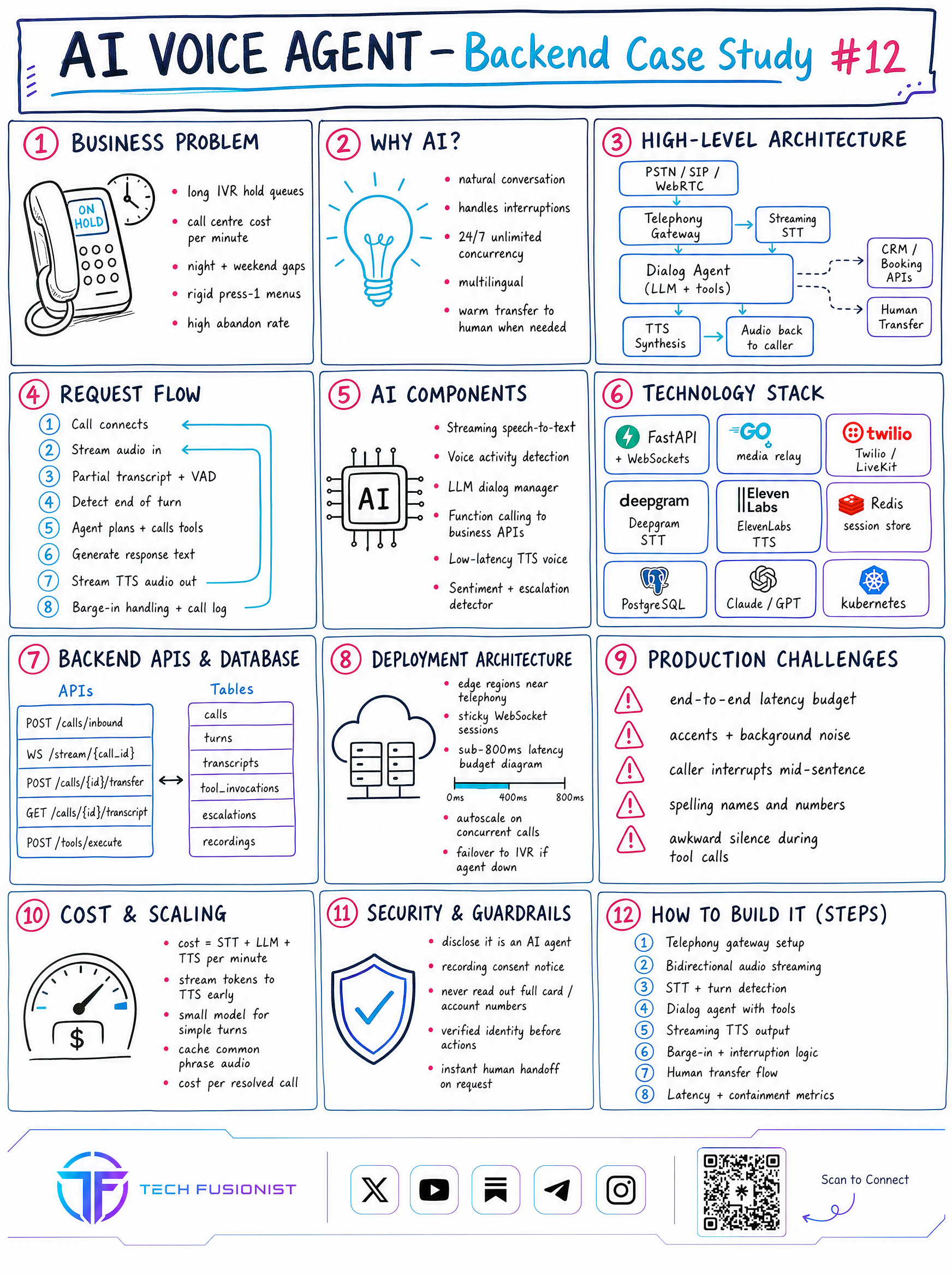
Modern voice agents can answer customer calls without long waiting times.
Streaming speech recognition, LLM reasoning, and real-time speech synthesis create natural conversations.
Low latency is everything.
If users request a human, transfer immediately.
Key takeaway:
Real-time speech pipeline
Function calling
Human handoff
13. AI Log Analyzer
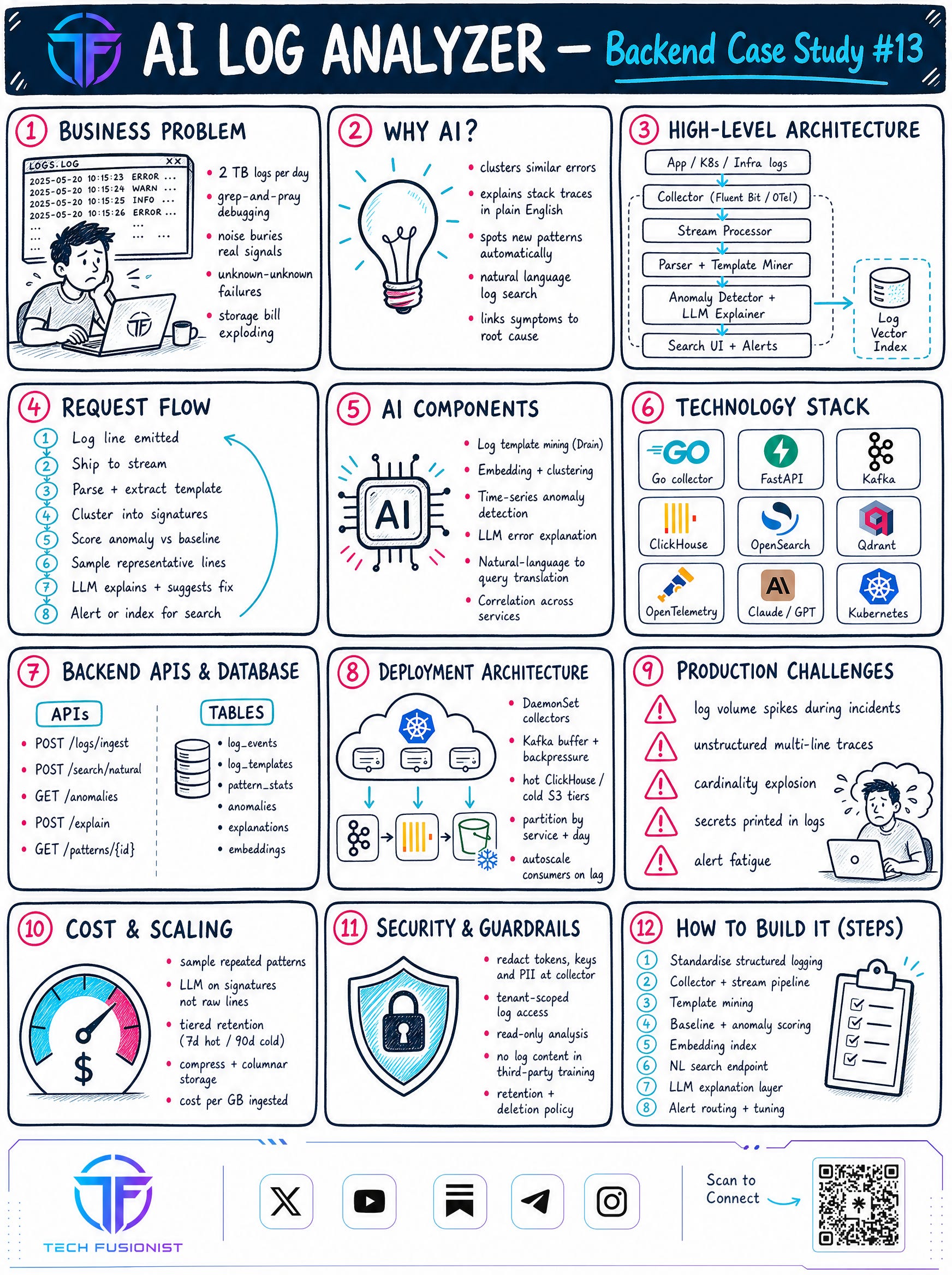
Searching through millions of log lines manually is slow and expensive.
AI systems first compress logs into patterns before asking the LLM to explain anomalies.
Never send raw logs directly to the model.
Remove secrets before processing.
Key takeaway:
Log clustering
Anomaly detection
Secure log processing
14. AI SQL Assistant
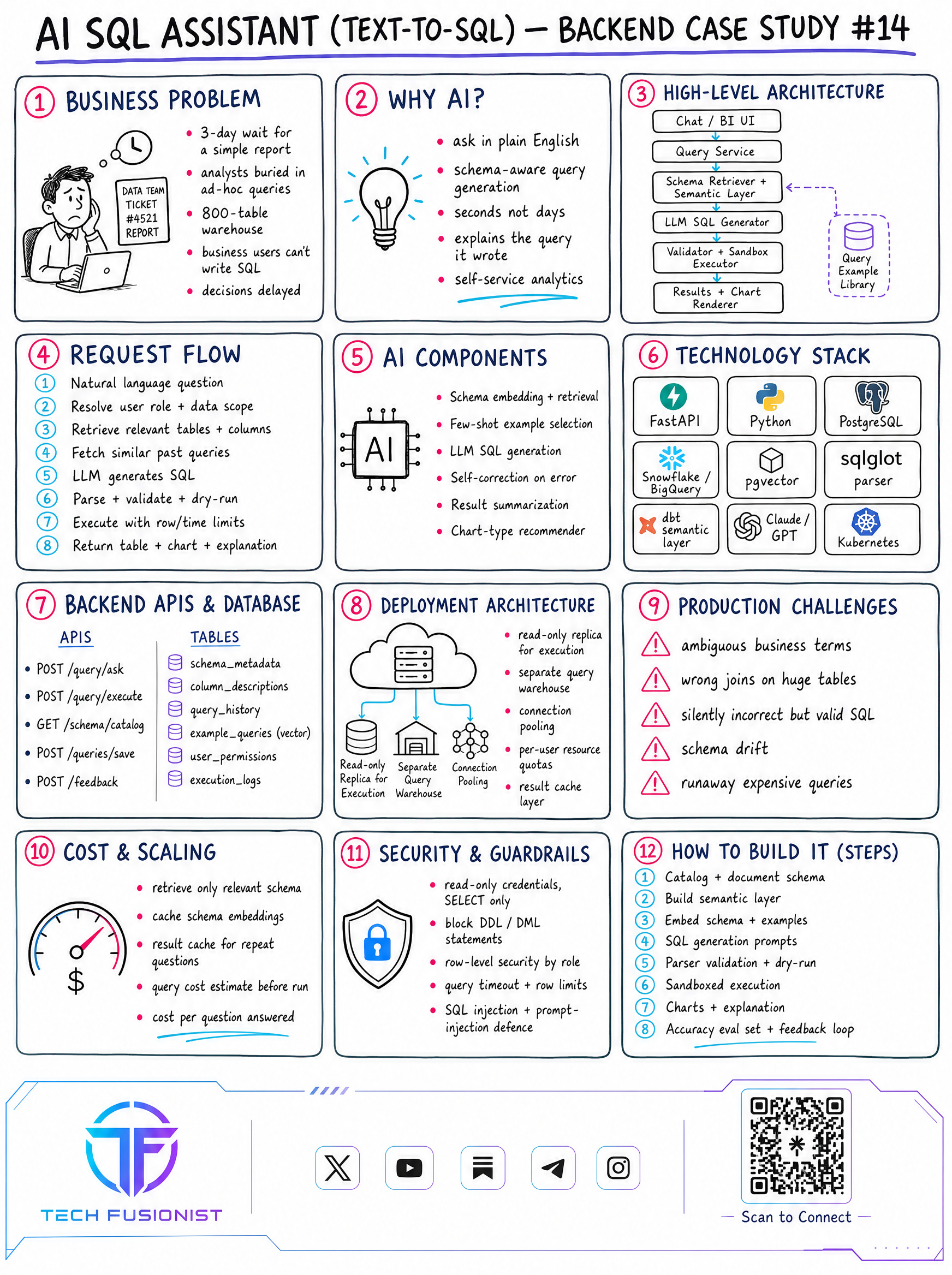
Business users shouldn’t wait days for simple reports.
AI can generate SQL after retrieving schema information and similar historical queries.
Always validate queries before execution.
Use read-only permissions with strict limits.
Key takeaway:
Schema retrieval
SQL validation
Safe execution
15. AI Document Intelligence
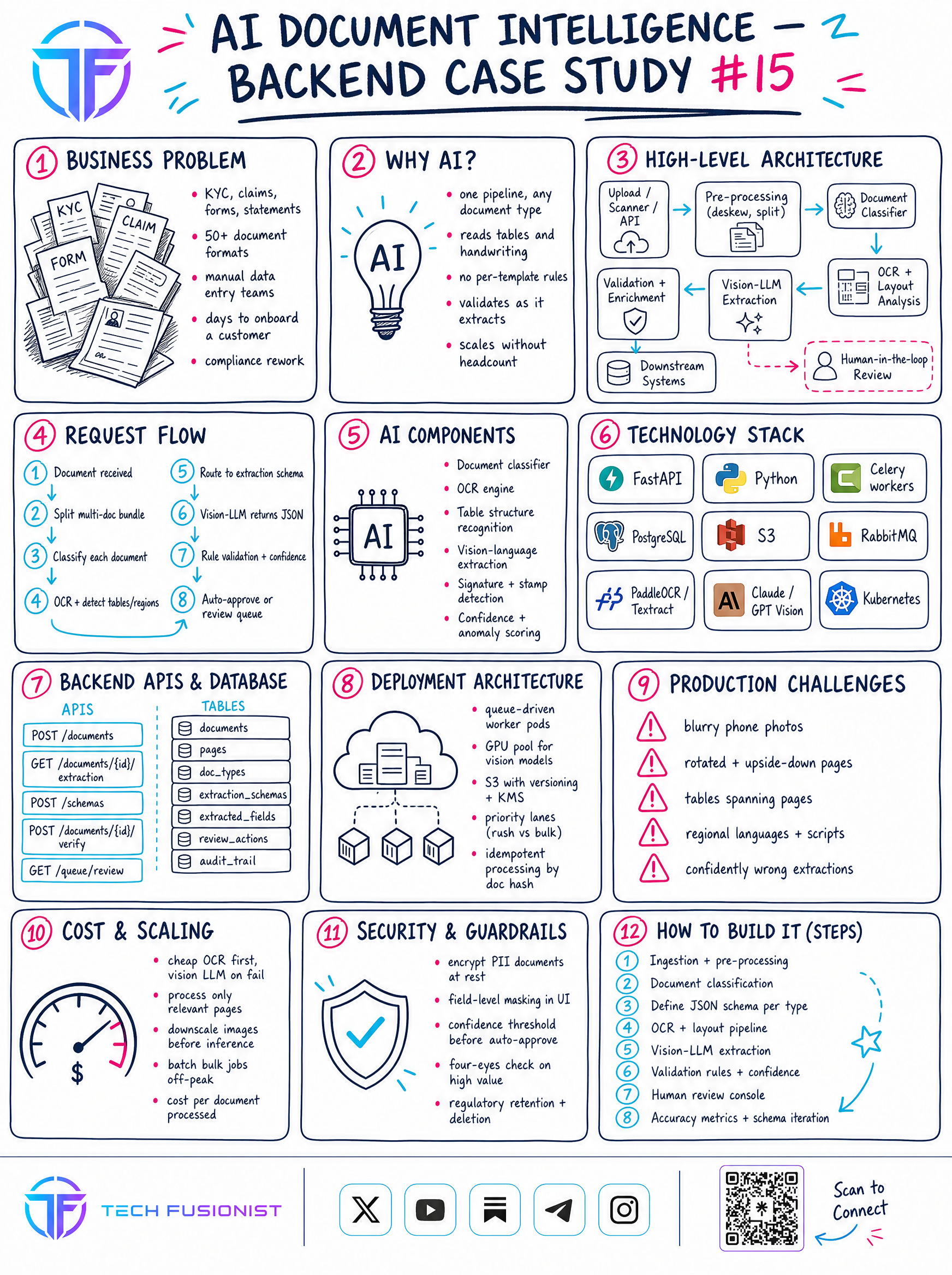
Insurance claims, KYC documents, and forms all arrive in different formats.
A production pipeline classifies documents, extracts information, validates results, and routes uncertain cases for manual review.
Use expensive Vision AI models only when cheaper OCR fails.
Key takeaway:
Smart document routing
Cost optimization
Human review
16. AI Workflow Automation
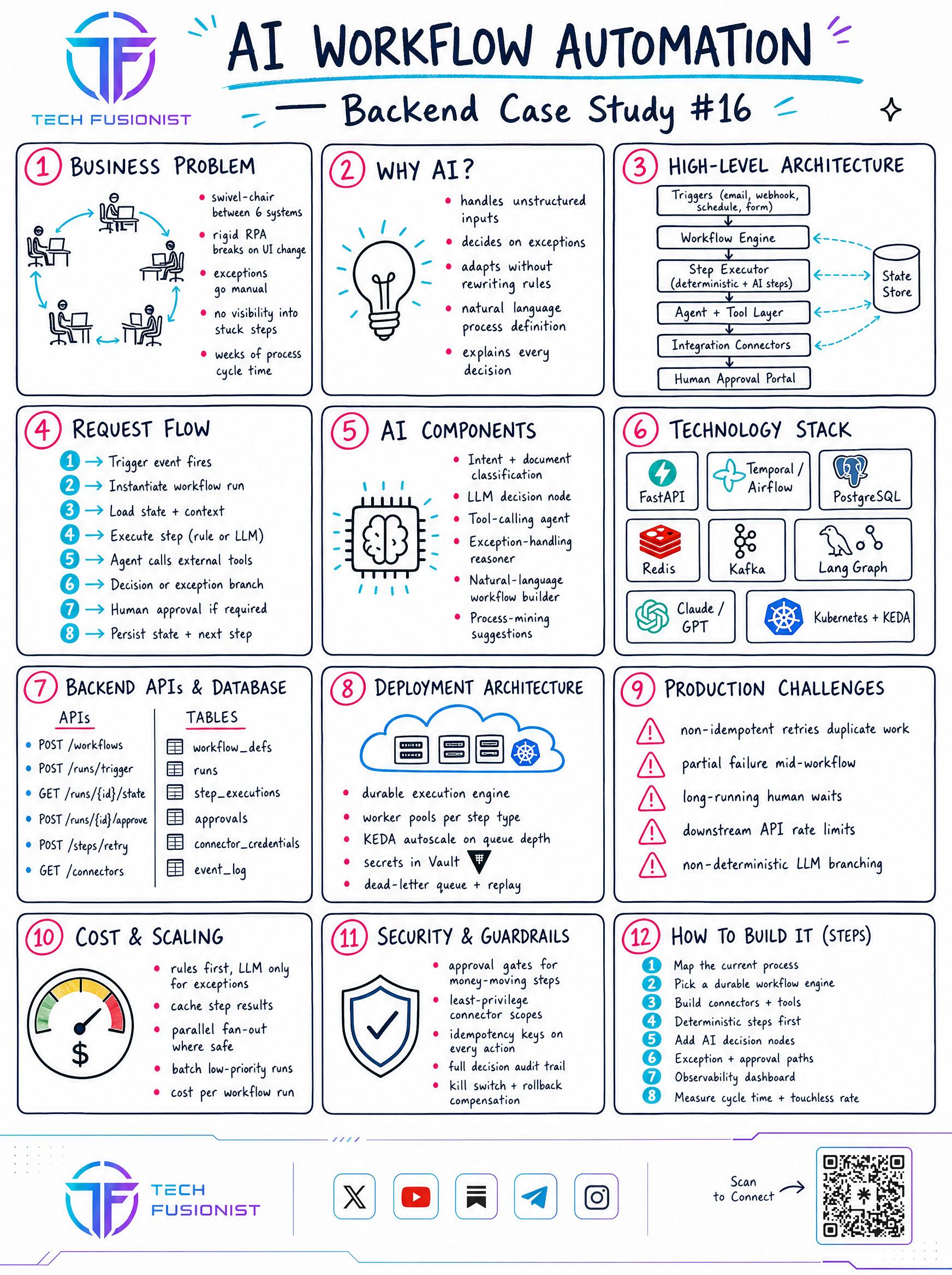
Traditional automation fails whenever interfaces change.
Modern AI workflows combine deterministic automation with LLM decision-making only where necessary.
Every action should support safe retries.
Key takeaway:
Durable workflows
Idempotency
Approval checkpoints
17. AI Research Assistant
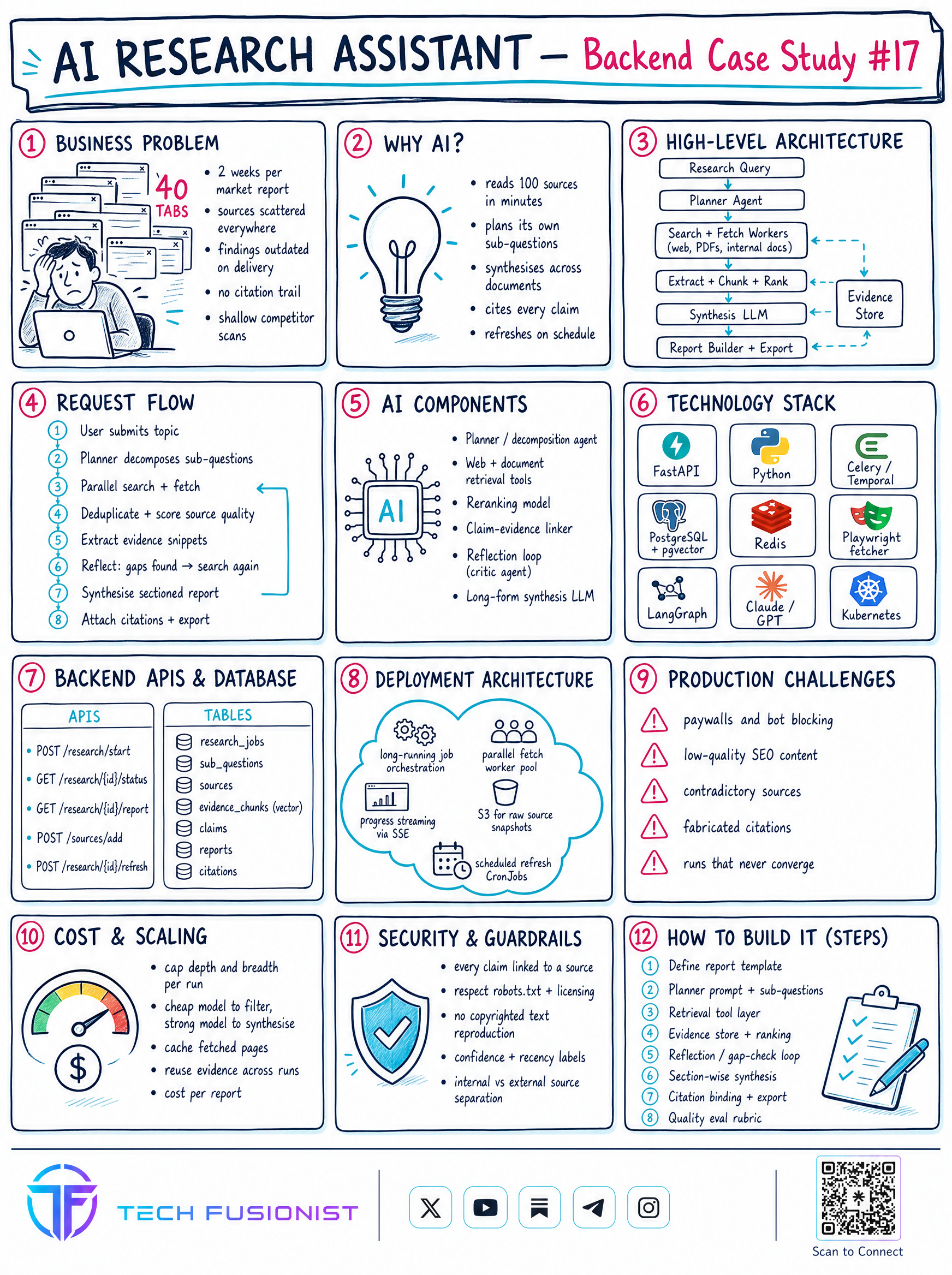
Research reports take days to prepare.
AI can plan research tasks, search multiple sources in parallel, verify evidence, and generate comprehensive reports.
Every conclusion should reference trusted sources.
Key takeaway:
Planning agents
Multi-source retrieval
Source-backed insights
18. AI Ticket Resolution Platform
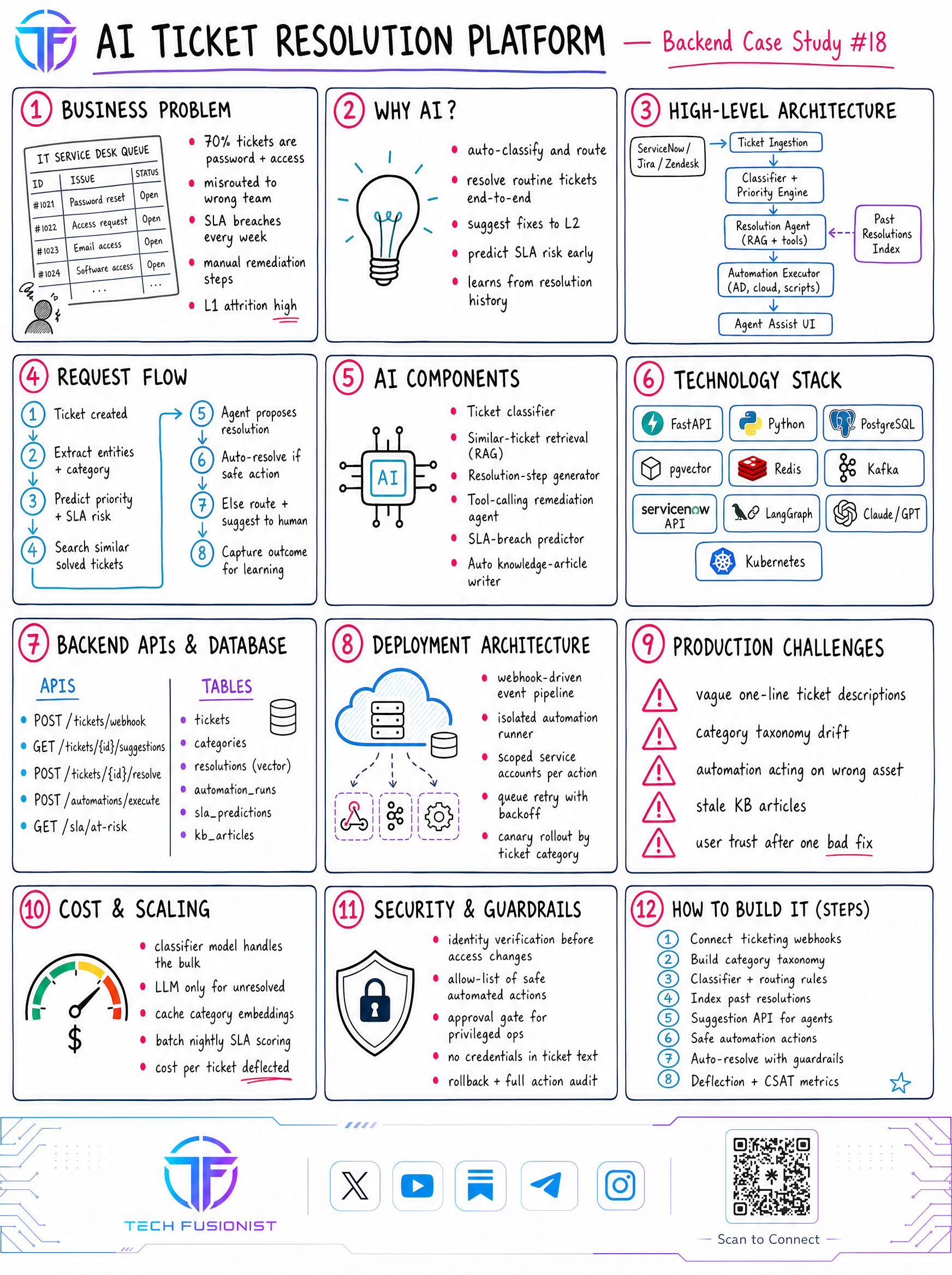
Most IT support tickets follow predictable workflows.
AI can classify requests, retrieve previous solutions, and automate safe actions.
Identity verification should always happen before access changes.
Key takeaway:
Ticket classification
Safe automation
Customer satisfaction
19. AI Recommendation Engine
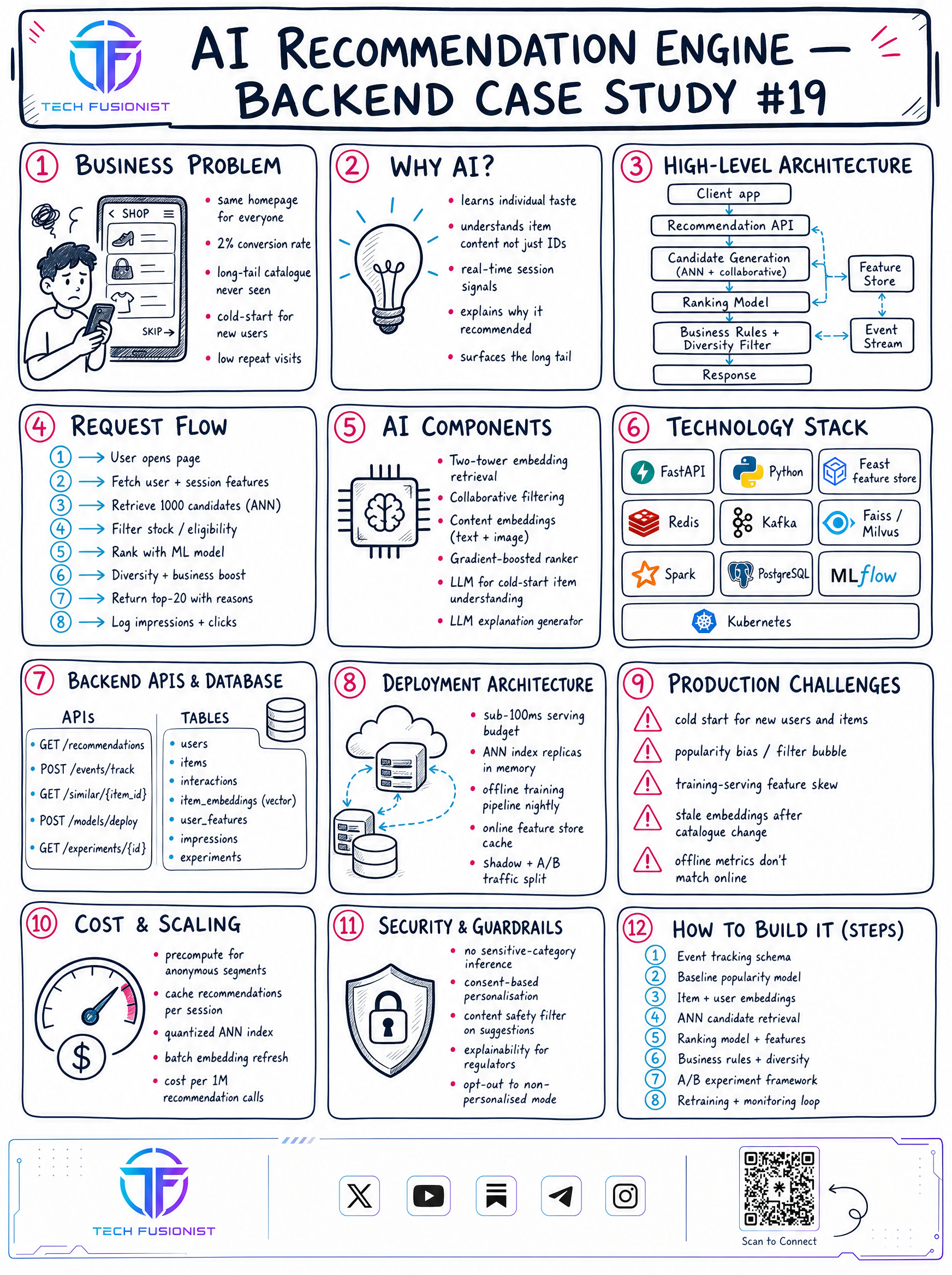
Recommendation systems power e-commerce, streaming platforms, and marketplaces.
Production systems first retrieve candidates and then rank them based on relevance.
Caching and feature consistency are critical for low latency.
Key takeaway:
Candidate retrieval
Ranking models
Fast response times
20. AI Multi-Agent Business Assistant
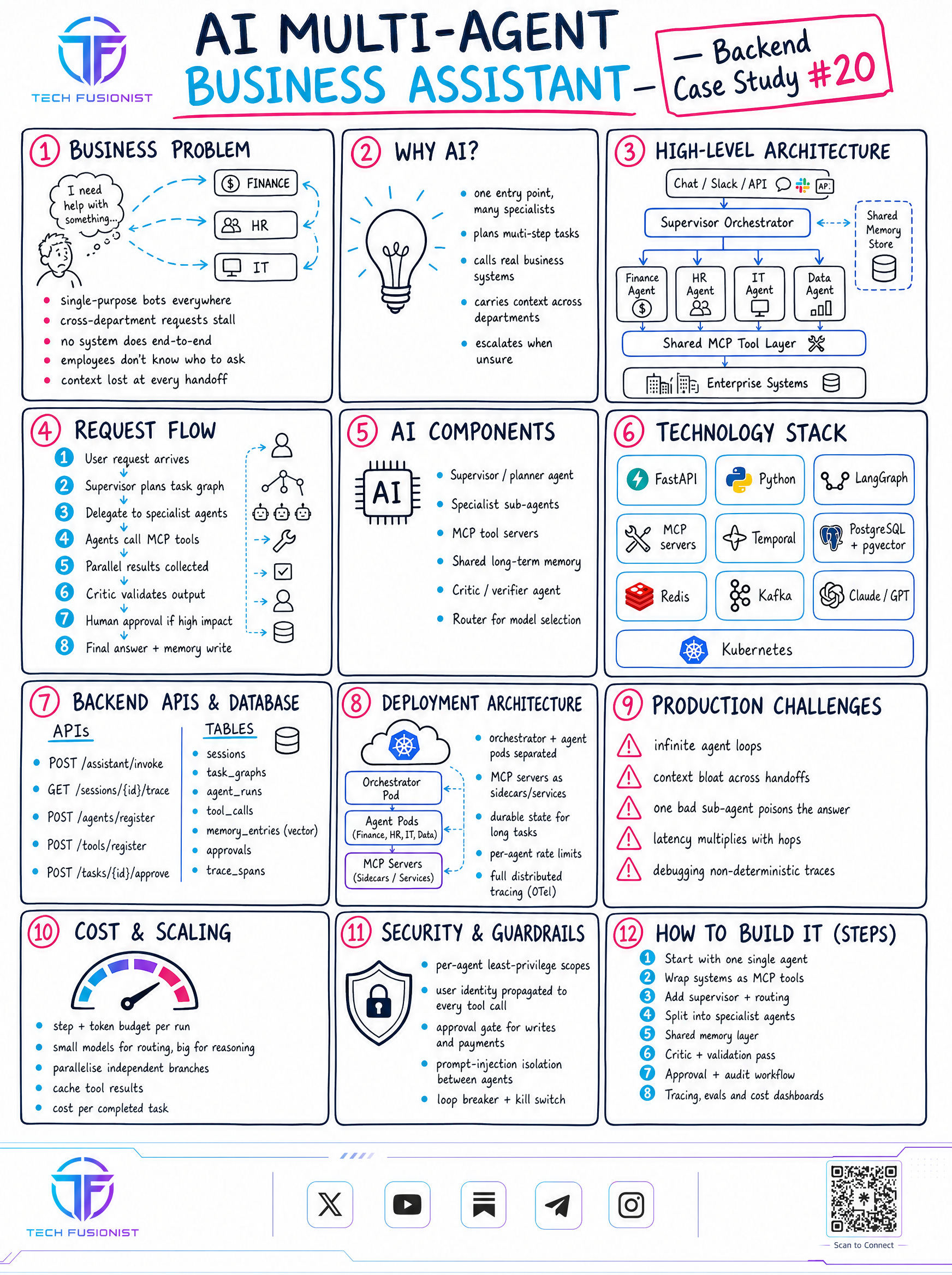
Some business requests involve multiple departments.
Instead of one AI agent doing everything, a supervisor agent coordinates specialized agents for Finance, HR, IT, and Operations.
Start simple.
Only introduce additional agents when there is a clear need.
Key takeaway:
Multi-agent orchestration
Task delegation
Controlled execution
The Pattern Behind Every Production AI System
After studying all 20 case studies, one thing became obvious.
Almost every successful AI system follows the same architecture principles.
Queue-based processing for long-running tasks
Retrieval layer to ground responses in enterprise data
Confidence scoring before automation
Human approval for important decisions
Complete audit trails for compliance
Cost tracking for every request
Master these building blocks and you’ll be able to design almost any production AI application.
Final Thoughts
Learning to call an LLM API is only the first step.
The real engineering challenge begins when you need to build reliable, secure, scalable, and cost-effective AI systems that businesses can trust.
These 20 case studies are designed to help you think beyond prompts and understand how production AI actually works.
If you found this guide useful, stay tuned.
I’ll be publishing detailed visual breakdowns for every system, covering architecture diagrams, request flows, API design, database schemas, deployment strategies, guardrails, and production best practices.
If you found this useful, follow Tech Fusionist for more visual guides on Cloud, DevOps, Kubernetes, AI, and System Design.
🔗 Linktree: https://linktr.ee/techfusionist
Happy learning! 🚀
~ Tech Fusionist